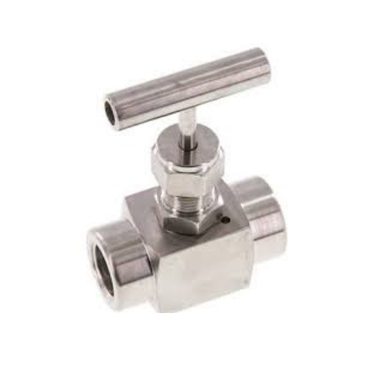
Needle Valve for Pressure Gauge Manufacturer
- Own factory
- Fully pressure tested
- Different diameters and materials to choose from
- Customization allowed
What is a Gauge Valve?
A gauge valve is the small valve located in front of the pressure gauge. Closing it resets the gauge to zero, allowing you to safely replace the gauge without stopping the production line. Once the replacement is complete, open the gauge valve and continue using it.
Features of Our Needle Valve for Pressure Gauge

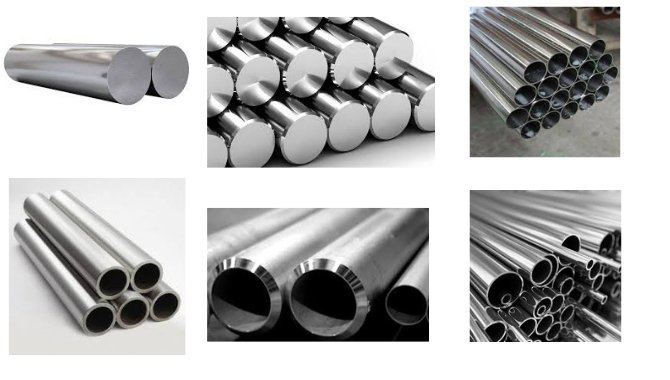
Stainless Steel (SS 304, SS 316), Monel, Hastelloy, Inconel, Alloy 20, Duplex & Super Duplex Steels

We can manufacture ニードルバルブ based on your drawings, or you can send us samples for production.

Every needle valve is tested before leaving the factory according to American standards such as API 598, MSS SP-61, MSS SP-99 and ASME B16.34.

Generally requires a 1/4” vent hole. But we also offer lines from 1/4” to 1/2” diameter.
Material Matters, How to Pick the Right Material for Your Project
When choosing needle valves for pressure gauge, material matters because it directly determines corrosion resistance, strength and cost of the needle valves. Below, we will discuss the common and uncommon pressure gauge valve materials and their suitable environments, helping you pick the right material in no time.
ステンレス鋼 (304, 316)
It is your first choice under 90% of normal operating conditions, and it is the material with the best value for money.
As for SS 304, its fairly average corrosion resistance makes it suitable for dry and non-corrosive media, for example, pure water, air, inert gas, and non-corrosive hydraulic fluid. But it is not suitable for environments rich in chloride ions, such as brine, salt spray, and seawater. It is prone to rust in chemical environments and outdoors by the sea.
As for SS 316, the addition of molybdenum enhances its corrosion resistance, making it suitable for weekly corrosive chemical media and chlorine-containing environments.It also has applications in process industries such as oil and gas, chemicals, and papermaking.
When stainless steel cannot withstand strong acids, strong alkalis, or extremely high temperatures, these following “expensive” materials are needed.
モネル
Its primary environments are seawater, salt solutions, and hydrofluoric acid. Monel alloy is commonly used for valve internals to prevent corrosion from seawater. At the same time, it is suitable for steam and various medium- to high-concentration alkaline solutions, and is essentially resistant to corrosion by alkaline solutions.
ハステロイ
It’s a versatile, corrosion-resistant solution.
As for Hastelloy C-276, it is particularly resistant to moist chlorine gas, hypochlorites, and chlorine dioxide. It is relied upon in highly oxidative environments as well as in applications involving high concentrations of chlorides such as seawater desalination.
As for Hastelloy B, it is primarily resistant to hydrochloric acid, it can withstand hydrochloric acid of moderate concentration at high temperatures.
Inconel
It is the king of high temperatures.
It is suitable for extremely high-temperature applications. When temperatures exceed 570°C (the limit for graphite packing), ordinary stainless steel softens, but Inconel remains rigid. It is used in instrument valves near thermal power plants, gas turbines, and high-temperature furnace tubes.
Alloy 20
It is the go-to solution for dilute sulfuric acid.
It is specifically designed to handle dilute sulfuric acid, which is a major threat to most types of steel. It is also widely used in nitric acid and phosphate chemical production.
Duplex or Super Duplex
They combine strength with corrosion resistance.
They are twice as strong as 316 stainless steel and offer exceptional resistance to chloride ion corrosion, making them ideal for seawater systems and high-pressure applications.
If you have trouble deciding which material to choose for your project, you can contact us for confirmation. We provide all of these materials for pressure gauge needle valves and are ready to become your reliable partner.
What Pressure Rating or Thread Standard is Needed
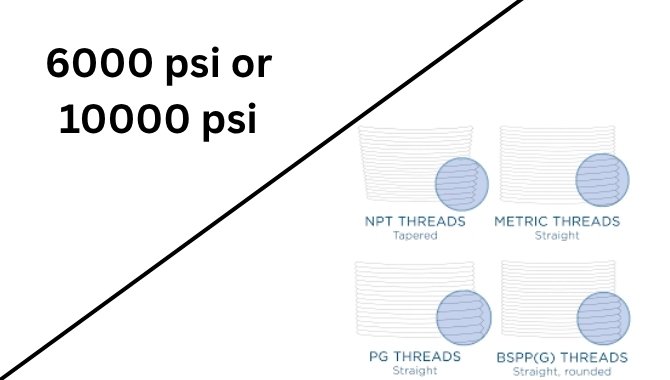
For most equipment and hydraulic systems, a pressure of 6,000 psi is perfectly fine. However, when you’re dealing with high-pressure gas or extreme hydraulic applications, you’ll need something more heavy-duty, in that case, 10,000 psi is the way to go. If your system is running at a pressure below 6,000 psi, the standard setup should work just fine. But if the pressure is above that, it’s best to opt for the 10,000 psi option to ensure everything runs smoothly and safely.
Most pressure gauges use either 1/2″ NPT or M20×1.5. Check your gauge. If it’s from North America, likely 1/2″ NPT. From Europe or Asia, likely M20×1.5. Not sure? Send us a photo. We’ll tell you.
PTFE or Graphite Packing for Needle Valve, Pick by Your Temperature
PTFE packing (standard)
- -54°C to +200°C
- Good for most chemical and general service
- Low friction, smooth operation
Don’t use above 200°C, PTFE softens and leaks
Graphite packing (optional)
- -50°C to +570°C
- For high temperature steam, hot oil, thermal fluid
- Stays tight when PTFE would melt
Rule of thumb: If your process runs under 200°C, PTFE is fine. Above 200°C, ask for Graphite. If you’re not sure, pick PTFE, it covers most applications.
If you need help, tell us your temperature and media. We’ll recommend the right packing.

Custom-make Needle Valve is Accepted
We know sometimes a standard needle valve for pressure gauge can not meet your specific needs. That’s why we accept customization.
For example, if you need to add a plug to the needle valve, or if you need a needle valve of a special diameter. Feel free to send us your drawings. If you don’t have a drawing yet, it doesn’t matter. We can make a drawing for your confirmation based on your description. So, your specific needs can be fully met.
What’s more, OEM is accepted too. We can print your logo on the needle valve without extra cost.
Why not try some samples first? MOQ is 10 pcs. You don’t need to place a large order before you are satisfied.
Where Are Needle Valves for Pressure Gauge Used?

Every pressure gauge on a reactor or distillation column needs isolation. Change gauges without shutting down the process.
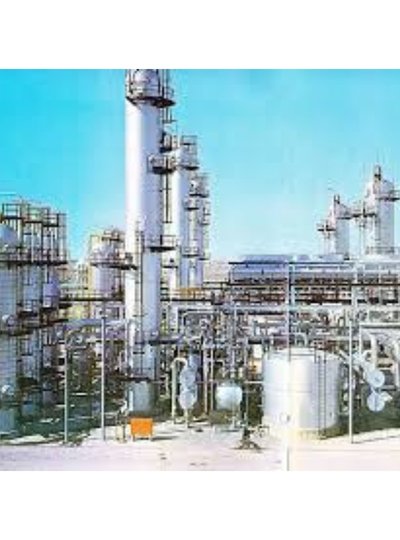
High pressure, high temperature, safety critical. Block-and-bleed valves give double isolation.

Boiler pressure gauges. Steam service needs Graphite packing. Isolation lets you change gauges online.
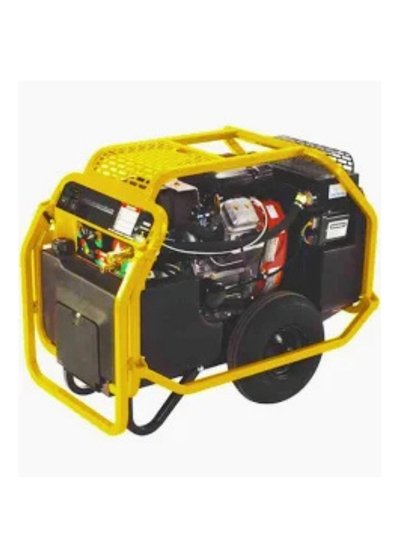
Pressure gauges on pump discharge and accumulator. Isolate to protect gauges from pressure spikes.

Connect a gauge, a switch, and a data logger all to one test point. Multi-port valves do it all.

Not high pressure, but still need isolation. NPT threads standard.


Close the needle valve all the way. If your valve has a vent port, open it to release trapped pressure behind the gauge. Wait for the gauge to read zero, then remove it. Install the new gauge, close the vent port, and slowly open the needle valve. No spray. No injury.
Most of the time, the packing just needs a slight tightening. Take a wrench and turn the packing nut about 1/8 of a turn. Do not overdo it. If the handle becomes hard to turn, you have gone too far. If it still leaks, the packing may need replacement. For service above 200°C, PTFE packing will soften. You need graphite packing.
No. NPT is a tapered thread that seals with sealant tape. M20 is a straight metric thread that seals with a washer or O-ring. They will leak and damage each other if forced together. North American equipment usually uses 1/2″ NPT. European and Asian equipment usually uses M20×1.5. Not sure? Take a photo and send it to us. We will tell you what you have.
That number is the heat code for the stainless steel batch. It allows you to trace the material back to the original mill test report. Every batch of needle valves comes with an MTC (material test certificate) that shows the chemistry and mechanical properties. Your quality team will have the paperwork they need.