


NPT is the US standard for tapered pipe threads. The taper wedges the threads together when tightened – that’s the sealing mechanism.
However, the thread crests and roots never fully mate. Those microscopic gaps form a spiral leak path. So tape or pipe dope isn’t optional – it’s required.
Here’s a straightforward guide that walks you through each step, from prep work to final tightening. Follow it and your connections will hold.
Preparation Before Installation
Inspect the Threads
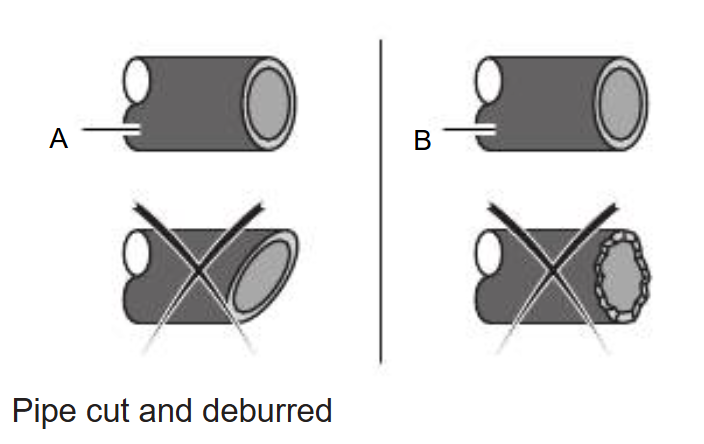 Inspect both the male and female threads for nicks, burrs, damaged or deformed threads, corrosion, dirt, and old sealant. Do not install a fitting with visibly damaged or deformed threads.
Clean the Threads
Then, clean the threads. Grab a clean rag or wire brush and wipe off any oil, grease, dust, or old sealant from the threads.
Dry Fit
Do a quick dry fit before you apply any sealant. Hand-tighten the male fitting into the female port and see how it feels. It should thread in smoothly – no wobble, no grinding, no forcing. It should also stop and bind part way in, not spin all the way to the bottom. If something feels off – too tight, too loose, or it’s catching at an angle – stop right there. Don’t force it. Double-check the thread size, the standard (NPT vs BSP), and inspect both parts for damage. A dry fit that fails is a warning. Heed it and you save yourself a leak down the road.
Confirm Thread Compatibility
Before you go any further, make sure you’re actually working with the same thread type on both ends. NPT and BSP/ISO threads are different systems – they may look alike at a glance, but they are not interchangeable. Forcing them together won’t seal, and it’ll damage the threads.
Check the markings on the fittings, look up the specs, or use a thread gauge if you’re not sure. If there’s any doubt about the thread standard or size, stop and verify it. Don’t assume. Don’t guess. Verify it first, install it second. That one extra check can save you from a leak that’s expensive to fix.
Thread Sealants: Tape vs. Pipe Dope
PTFE tape and pipe dope both get the job done—they fill those tiny spiral gaps in NPT threads so nothing leaks. But they work differently, and each one shines in different applications.
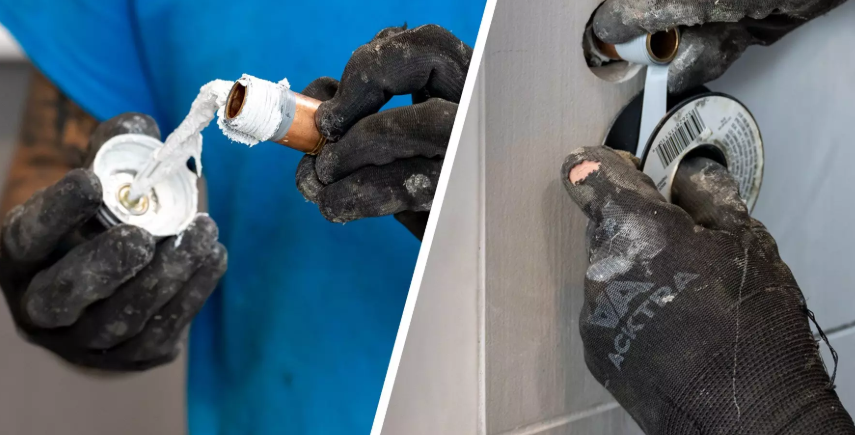
PTFE Tape
PTFE thread seal tape is wrapped around the male threads. It’s clean and easy to apply, and it doesn’t need curing time before assembly. The downside? You have to apply it correctly. Too much tape and you’ll interfere with thread engagement. Too little and it won’t seal.
Pipe Dope (Thread Sealant)
Pipe dope is a liquid or paste you brush onto the male threads. It seals and lubricates at the same time – which helps prevent galling on stainless steel.
Some products handle extreme temperatures, high pressures, or harsh chemicals. Others don’t. Check the label for pressure, temperature, and chemical compatibility.
Cure time varies too – some dry fast, some don’t. Read the instructions and give it the time it needs before pressurizing.
How to Apply PTFE Tape
Pick the right tape width for the job. For 1/8″, 1/4″, and 3/8″ male NPT threads, use 1/4-inch tape. For 1/2″ and up, go with 1/2-inch tape.
Start wrapping from the second thread back from the opening. Leave the first thread bare – you don’t want tape hanging past the end where it can shred off and get into the system.
Wrap clockwise when you’re looking at the threaded end. This way the tape pulls into the threads as you tighten, instead of peeling off. Keep it taut as you go – loose tape bunches up and won’t seal. Overlap each wrap by about half the tape width so you get full coverage without gaps.
How many wraps? For most medium-to-thick tapes, 2 to 3 wraps is enough. If you’re using thinner hardware-store tape, go with 3 to 5. If the fitting binds too early when you hand-tighten, you’ve used too much – peel it off and start over.
When you’re done, tear the tape off cleanly and press the loose end flat against the threads so nothing sticks up.
How to Connect & Tighten Conexiones NPT
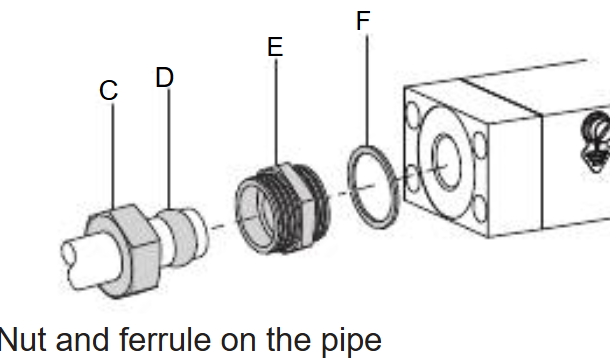 Step 1: Hand Tighten
Screw the male fitting into the female port by hand until it can no longer be turned; this is the “hand-tight” position. Most NPT fittings can be screwed in by hand for 3 to 5 turns before reaching this point. If the number of turns differs significantly, the threads may be out of specification. Use the alignment mark made during the dry fit to verify that you have returned to the correct hand-tight position.
Important: never screw it in all the way to the bottom. The fitting should not bottom out against the female port; if it does, there is a problem with the threads.
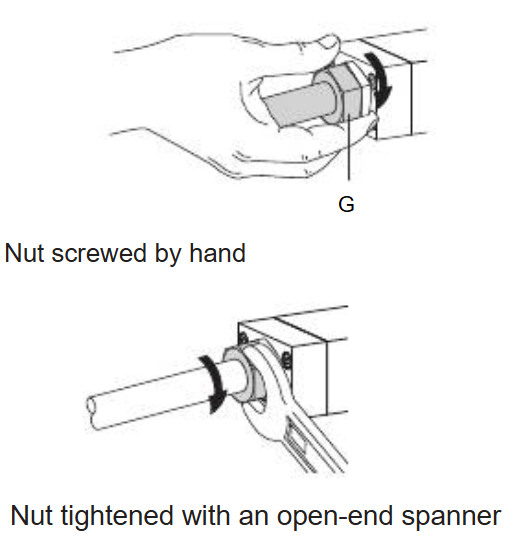
Step 2: Wrench Tighten
As a general guideline, tighten 1.5 to 3 turns past hand-tight for most NPT fittings under 1 inch. For larger sizes, follow the manufacturer’s recommendations. ASME B1.20.1 suggests up to approximately 3 turns for many sizes, but actual practice often uses fewer turns.
Step 3: Clocking (For Elbows and Angle Fittings)
If you are installing an elbow or an angled fitting, the orientation of the opening is crucial. If the fitting aligns correctly before you have reached the recommended number of turns, keep turning—do not stop early. If you have already turned past the alignment point, keep turning—do not back it off. Never back off or loosen the fitting to adjust its orientation, as doing so will compromise the seal. Plan your starting position carefully to ensure the fitting ends up in the required orientation.
Common Mistakes to Avoid
Even experienced installers make mistakes. Here are the most common pitfalls and how to avoid them.
Wrapping Tape in the Wrong Direction: Winding counter-clockwise will cause the tape to loosen during tightening. It always winds clockwise. Check the direction before you start; it is easy to get it wrong.
Using Too Much Tape: Excessive tape can interfere with proper thread engagement and potentially cause the female fitting to crack; furthermore, fragments of tape could enter the system and clog valves or filters. Refer to the recommended wrap count above: 2–3 wraps for thick tape, and up to 5 wraps for thin tape.
Over-Tightening: Overdo it with the wrench and you can crack the fitting, strip threads, or warp the connection. PTFE tape makes this easier because it lubricates—turns feel so smooth you won’t notice until it’s too late. Follow the recommended turns for your size (usually 1.5 to 3 past hand-tight). If it still leaks, don’t just crank it more. Take it apart, clean it, and reseal properly.
Under-Tightening: Being too gentle can leave the threads loose. Tapered threads need to be driven in far enough to wedge together and actually seal. Follow the turn specs—stopping short will just give you a slow drip.
Not Cleaning Threads First: Sealant won’t stick to dirty, oily, or rusty threads. It takes 30 seconds to clean them first, and it saves you a lot of trouble down the road.
Covering the First Thread with Tape/Sealant: If tape or dope hangs over the end of the fitting, pieces can break off and end up inside the system. Start wrapping at the first thread, but keep the tape flush with the fitting face or just behind it—never let it go past the end.
Preguntas frecuentes
Q1. Can I use PTFE tape and pipe dope together?
Yeah, plenty of pros do it that way. Wrap with PTFE tape first, then brush a thin coat of pipe dope on top. The tape fills the bigger gaps; the dope seals the small ones. On high-pressure joints, using both gives you an extra layer of leak protection.
Q2. What’s the difference between NPT and NPTF?
NPT always needs sealant. NPTF (Dryseal) is designed to seal dry, but if mixed with NPT, you still need sealant. Unless you’re sure the fittings are brand-new NPTF and perfect, use sealant.
Q3. Why does my NPT fitting still leak after tightening?
Most leaks come down to one of these: dirty threads, using the wrong sealant, tape wrapped backwards, too many or too few wraps, not tight enough, overtightened and deformed threads, damaged threads, or mixing NPT with BSP.
Q4. Can I reuse an NPT fitting?
Not really. Tightening deforms the threads each time. If you must reuse one, inspect carefully and apply fresh sealant. For critical systems, install new fittings—it’s not worth the risk.
Contáctenos
If you’re unsure which fitting or sealant to use, our engineers can help. NPT-LOK has been manufacturing accesorios de tubería for more than 20 years. We can offer you stable, high-quality tube fittings. We have supplied tube fittings to many customers and have extensive project experience. We can also custom-make a tube fitting following your specific requirements.
For more details, feel free to download our NPT Fittings Catalog.
Learn more sobre nosotros.


