


A pipe plug is a cylindrical fitting with a male threaded shaft that screws into the internal threads of a pipe to seal an unused opening.
But before we go further, let‘s clear up a common confusion: what does NPT mean in fittings? NPT stands for National Pipe Tapered, the American standard thread (ASME B1.20.1) used on most pipe plugs in North America.
If you are looking for what is a pipe plug or the role of a plug in piping, this guide covers both.
Definition and Key Functions of Pipe Plugs
A pipe plug, also known as a drain plug or fill plug, is a cylindrical pipe fitting featuring a drive section at one end and a threaded shaft at the other. Its function is straightforward: it screws into the threaded opening at the end of a pipe to seal off an unwanted opening and prevent the flow of fluid.
Pipe plugs serve several purposes. Their main job is stopping the flow of liquids or gases. They also protect internal threads from dirt and debris, keeping them clean for future connections. In addition, plugs isolate sections of a pipeline, allowing repairs without draining the entire system. They’re also used to seal test ports during pressure testing.
Small as it is, a pipe plug plays a big role in keeping systems safe and leak-free.
Pipe Plug Vs. Pipe Cap
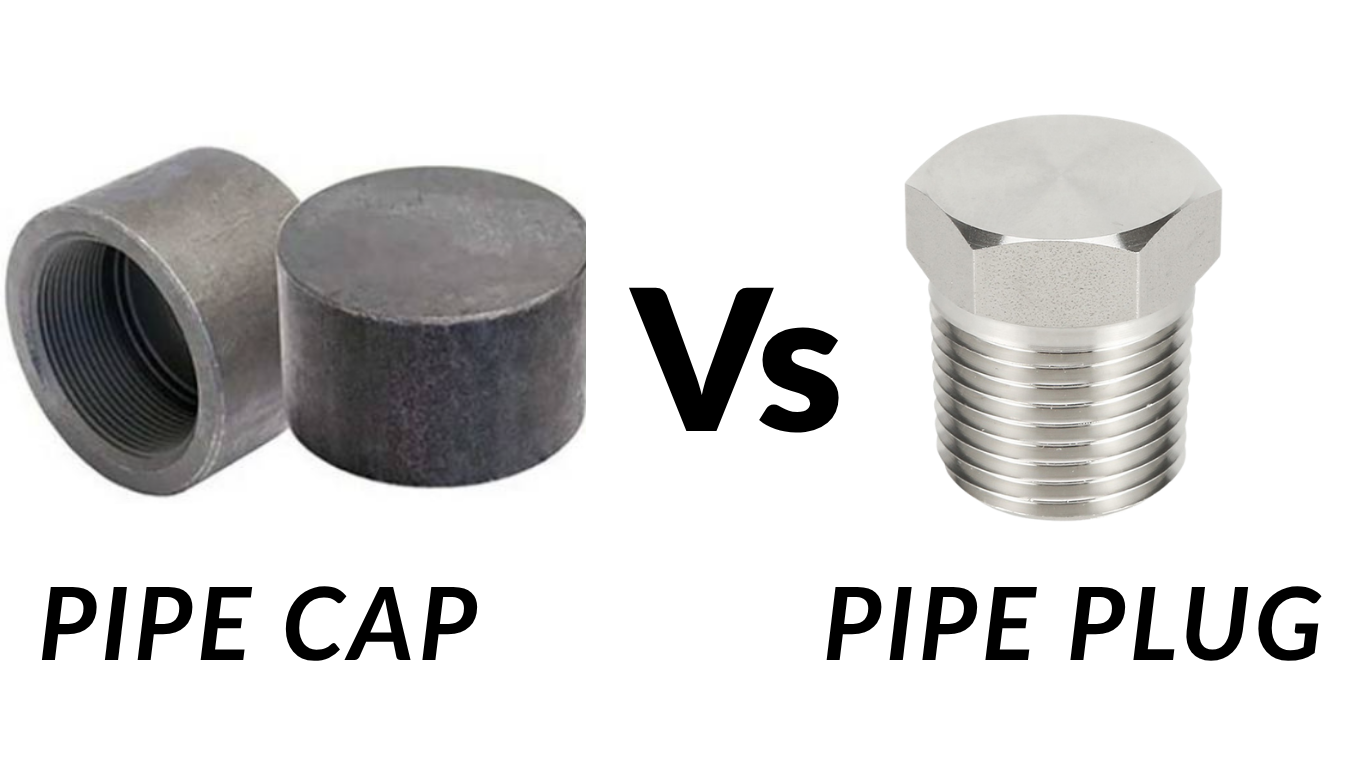
People mix up pipe plugs and pipe caps all the time. But they’re not interchangeable—each has its own job and its own way of going on.
A cap covers the end of a pipe from the outside. It keeps whatever’s inside from spilling out and keeps dirt from getting in. A plug, on the other hand, goes inside the pipe. It’s there to stop flow and seal things up from the inside. They are easy to distinguish by appearance. Caps are flat and round on top; plugs look more like stoppers.
In short, If the pipe has internal threads, use a plug. If it has external threads, use a cap.
How Does a Pipe Plug Work?
A pipe plug seals against the pipe through its threads. Tighten it, and the threads grip the mating threads inside the pipe, blocking flow. But how that seal happens depends on the thread type. There are two basic kinds: tapered and parallel. They work differently.
Tapered Threads
Tapered threads have a 1:16 taper. As you tighten the plug, the taper forces the threads together, creating an interference fit, a metal-to-metal compression that seals the joint.
NPT threads (ASME B1.20.1, 60° thread angle) require PTFE tape or sealant to fill the spiral leak path between threads.
NPTF threads (ANSI B1.20.3) are designed with interference at the root and crest, so they seal without sealant – ideal for fuel and hydraulic systems.
BSPT threads (ISO 7-1, 55° thread angle) are the international equivalent, common in Europe, Asia, and Australia.
Parallel Threads
Parallel threads (BSPP / G threads per ISO 228) do not seal by themselves. They need an O-ring, gasket, or bonded seal at the face or shoulder to create a leak-tight connection.
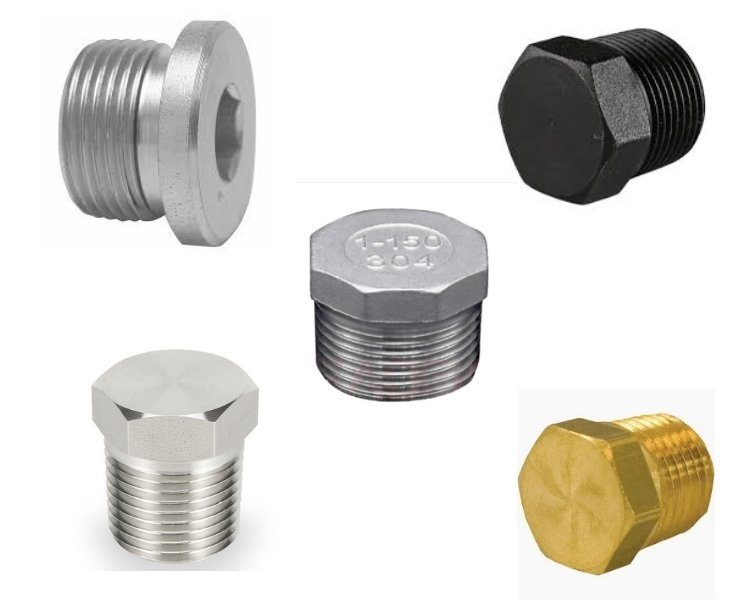
Common Types of Pipe Plugs
Pipe plugs come in various designs to suit different installation and service requirements.
Hex head plugs feature a standard hexagonal head that can be turned with a wrench or socket. This design offers good torque transmission and works well in most general-purpose applications where there’s enough clearance around the fitting to swing a wrench.
Square head plugs have a four-sided head that provides a larger grip surface. They‘re often used in heavy-duty or high-pressure systems where higher torque is required. The square shape offers a more positive engagement with the wrench and reduces the risk of rounding off the corners.
Socket-type plugs—often called hollow hex plugs—have a recessed hex drive in the head. Install them and they sit flush with the surface, sometimes even below it. That makes them a great fit for tight spots or anywhere you want a clean, low-profile look.
Slotted plugs are about as simple as they come. Just a straight slot across the head, and you turn them with a flathead screwdriver. They’re not for heavy torque—these are for light-duty jobs where easy installation matters more than brute clamping force.
Materials
The material of a pipe plug plays a major role in its performance and lifespan.
| Material | Designator | Standard (Bar/Forged) | Key Properties | Typische Anwendungen |
| Stainless Steel 316 | SS | ASTM A276 / A182 | Excellent corrosion resistance; high strength; withstands up to 1000°F (537°C) | Chemical processing, marine, pharmaceutical, high-temperature systems |
| Stainless Steel 304 | S4 | ASTM A276 / A182 | Good corrosion and temperature resistance; cost-effective | General industrial applications |
| Kohlenstoffstahl | C | ASTM A108 / A105 | High strength; cost-effective; electrodeposited zinc-plated for corrosion resistance | General industrial, high-pressure systems (up to 375°F / 190°C) |
| Messing | B | ASTM B16 / B453 | Good corrosion resistance; easy to machine; temperature range -40°F to 400°F (-40°C to 204°C) | Water, air, mild chemical applications; plumbing |
| Aluminum | AL | ASTM B211 / B247 | Lightweight; good corrosion resistance | Weight-sensitive applications; aerospace |
Selection Guide
Choosing the right pipe plug for your application comes down to four key factors.
Firstly, identify the thread standard of your pipe. NPT is the most common in North America, while BSP is widely used in Europe, Asia, and Australia. These two are not interchangeable—mixing them will cause leaks or thread damage. If you’re unsure, check your pipe’s documentation or use a thread gauge.
Secondly, match the material to your media, temperature, and pressure. Stainless 316 handles corrosive fluids and high heat. Stainless 304 covers general industrial needs. Carbon steel is strong and budget-friendly for high-pressure systems. Brass works well for water, air, and mild chemicals. Aluminum is the choice when weight matters.
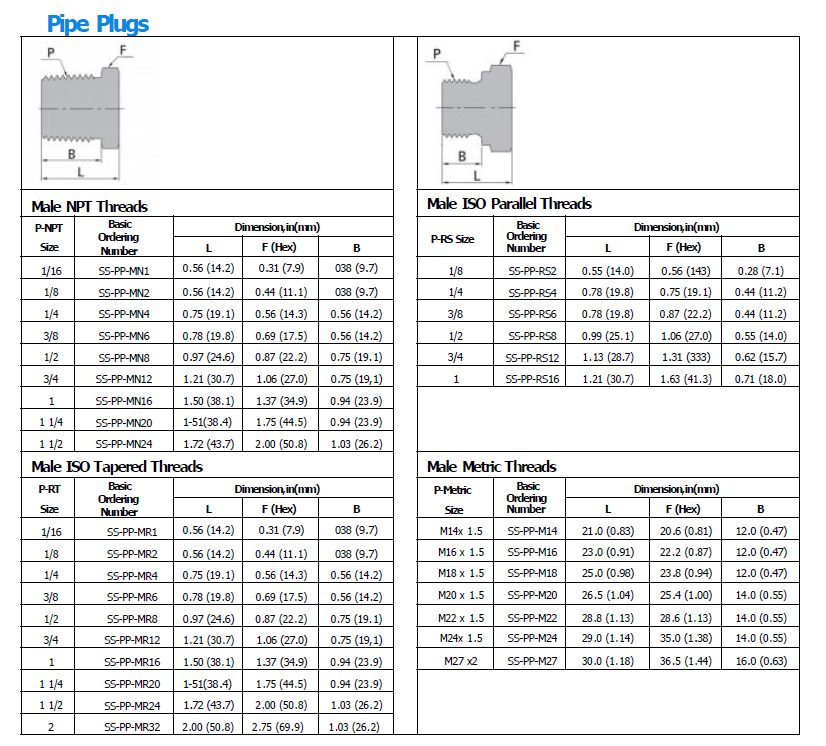
Next, pipe plug sizes are based on nominal pipe size (NPS), not the actual measured diameter of the threads. For example, a 1/4″ NPT plug measures about 0.533″ across—not 0.25″. Always confirm the internal thread size of your pipe before ordering.
Lastly, choose the drive type. Consider your installation space and torque needs. Hex head plugs are the go-to for most applications. Square head plugs handle higher torque without rounding off. Socket-type (hollow hex) plugs sit flush, making them ideal for tight spots. Slotted plugs are for light-duty jobs where simplicity is key.
Häufig gestellte Fragen
Q1. What does NPT stand for in pipe fittings?
NPT stands for National Pipe Tapered. It is the American standard for tapered pipe threads (ASME B1.20.1), used on most pipe fittings in North America. The taper creates a seal as the threads compress together; PTFE tape or sealant is required to fill the spiral gap.
Q2.What is the difference between NPT and BSP threads?
NPT is an American standard with a 60° thread angle and flattened crests. BSP uses a 55° angle with rounded crests. They have different thread counts per inch and are not interchangeable. For more details, visit NPT Vs. BSP.
Q3.What material is best for a pipe plug?
It depends. For corrosive or high-temp, choose Stainless 316. General use? 304 works. Carbon steel handles high pressure on a budget. Brass suits water and air. Aluminum is lightweight. Match the material to your media, temperature, and pressure. When in doubt, go with 316.
Q4. Does a pipe plug require PTFE tape or sealant?
For NPT threads, yes – PTFE tape or thread sealant is recommended to fill the spiral leak path between threads. For NPTF (Dryseal) threads, no sealant is required because the threads are designed to interfere at the root and crest, creating a pressure-tight joint.
Q5. Can I reuse a pipe plug?
Yes, if threads are undamaged. Clean off old sealant, inspect for wear or rust. For critical jobs, play it safe and use a new one.
Q6. Can I use a pipe plug for gas lines?
Yes, but pick one rated for gas. NPTF plugs are a good choice since they seal without sealant. Just confirm pressure and temperature ratings first.
Q7. What is the role of a plug in a piping system?
A plug seals an unused opening from the inside. It screws into internal threads on a tee, coupling, valve, or pipe end. The key distinction: plugs go inside the pipe; caps go over the outside.
Choosing a Reliable Pipe Plug Manufacturer
NPTLOK manufactures a comprehensive range of pipe plugs to meet diverse industrial needs. Our pipe plugs are precision-machined from premium materials and are available in multiple thread standards, including NPT, NPTF, ISO/BSP, SAE, and metric, to suit different regional and industry requirements.
Our product range includes standard pipe plugs, hollow hex plugs, and close nipples, all manufactured to strict quality standards. All NPTLOK fittings feature a high-quality finish and have male threads capped for protection during transport and storage. Straight fittings are manufactured from quality bar stock, while shaped fittings are produced from forgings for superior strength.
Whether you need a general-purpose hex head plug for a standard piping system or a socket-type plug for a space-constrained instrument panel, NPTLOK has a solution to match your application.


